Please allow us to collect data about how you use our website. We will use it to improve our website, make your browsing experience and our business decisions better. Learn more Learn More
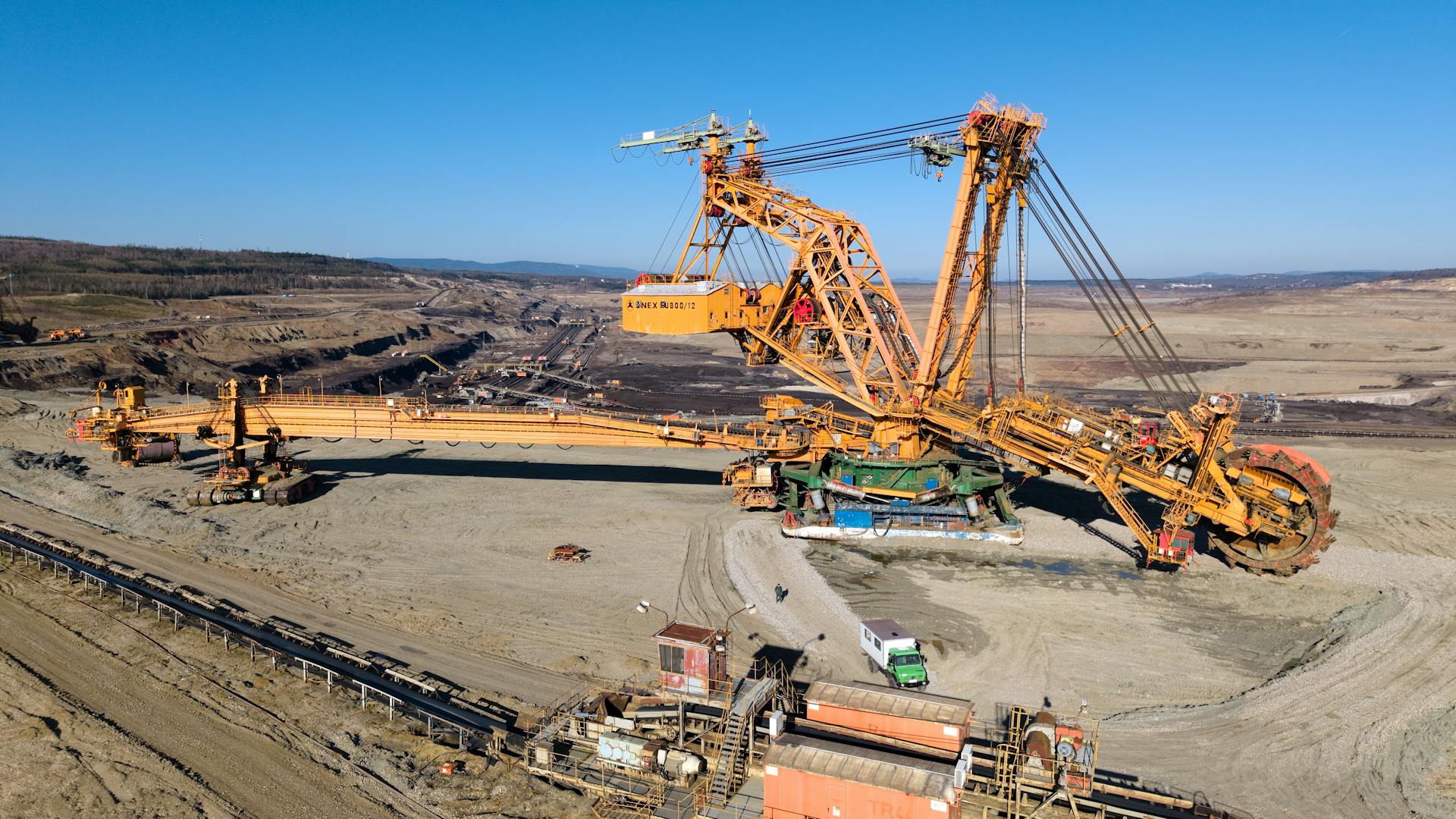
The world runs on natural resources. Every smartphone, electric vehicle, data center, and hospital depends on a complex web of metals, minerals, energy, and agricultural commodities that most investors overlook. In 2026, that oversight is creating one of the most compelling investment opportunities in decades. From record-breaking gold prices to a structural copper deficit and the resurgence of nuclear energy, natural resources are no longer just a hedge—they are a primary wealth-building engine.
Gold: The Metal That Refuses to Be Ignored
Gold entered 2026 on the back of a historic rally. After climbing as much as 55% in 2025 and surpassing $4,000 per ounce for the first time, the metal experienced a sharp correction in early 2026, falling nearly 17% from its January peak above $5,400/oz . But the story is far from over.
According to J.P. Morgan Global Research, the trends driving gold's rebasing higher are not exhausted. The bank forecasts prices averaging $5,055/oz by Q4 2026, rising toward $5,400/oz by end of 2027 . Wells Fargo Investment Institute has lifted its year-end 2026 target to $6,100–$6,300 an ounce, reflecting strong central bank buying and policy uncertainty . Even after the recent correction, more than a dozen major institutions maintain targets between $5,000 and $6,300 .
The structural case remains intact: central banks continue diversifying away from U.S. Treasuries, geopolitical fragmentation is accelerating, and fiscal deficits across major economies are eroding confidence in fiat currencies. As one strategist noted, "Investor confidence in fiat currencies has eroded, and gold has seen much of this flight to safety" . For investors, the correction may represent a buying opportunity rather than a trend reversal.
Copper: The Electrification Metal in a Structural Bull Market
While gold captures headlines, copper may be the more consequential investment story of the decade. S&P Global Market Intelligence reports that copper's 2026 average price forecast remains just above $12,100 per tonne due to concentrate shortages and limited new mine supply . Prices surged past $6.00 per pound in early 2026, touching an intraday peak of $6.11/lb in January—the highest nominal level in history .
The demand case is overwhelming. The Motley Fool notes that copper demand is on track to rise 50% by 2040, driven by AI data centers, electric vehicles (which use four times as much copper as traditional cars), and renewable energy infrastructure . A single wind turbine consumes 3 metric tons of copper per megawatt of power produced.
Yet supply cannot keep pace. Declining ore grades, rising energy intensity, and years of underinvestment in new mines have created a structural deficit. More than 99% of copper production sits below the 2026 consensus price, meaning margins remain healthy even if prices moderate . Analysts at J.P. Morgan forecast $12,500/mt ($5.67/lb) in Q2 2026, with Bank of America seeing prices rising to $13,501/mt ($6.12/lb) in 2027 .
For investors, top copper stocks include BHP Group, Freeport-McMoRan, and Teck Resources—companies with the reserves, low-cost production, and expansion projects to capitalize on this multi-year bull market . Low-AISC producers generating $2.50+/lb free cash flow at $6.00/lb copper offer exceptional leverage without the storage risks of physical metal .
Nuclear Energy and Uranium: The Clean Baseload Power Play
Nuclear energy is experiencing a renaissance that few saw coming. As countries grapple with energy security and decarbonization, nuclear offers the only proven source of carbon-free baseload power. TradingKey's 2026 nuclear outlook identifies Cameco as the best pure uranium exposure—a large, low-cost producer that profits when prices are high while its integrated conversion and fuel services provide additional revenue streams .
GE Vernova (GEV) offers broader nuclear exposure through its GE Hitachi subsidiary, which is developing the BWRX-300 Small Modular Reactor licensed for construction in Ontario . Brookfield Renewable Partners provides exposure to nuclear services through its majority ownership of Westinghouse, alongside diversified clean power assets. For ETF investors, the Global X Uranium ETF (URA) and VanEck Uranium and Nuclear ETF (NLR) offer targeted exposure to the uranium cycle and nuclear value chain .
Agriculture and Soft Commodities: The Inflation Hedge
While metals dominate the natural resources narrative, agricultural commodities offer their own compelling dynamics. IG UK's 2026 commodity outlook highlights the Invesco DB Agriculture ETF, which tracks a diversified portfolio including cocoa, corn, soybeans, and wheat . With global food demand rising, supply chains vulnerable to climate disruption, and input costs elevated, agricultural commodities provide both inflation protection and portfolio diversification.
The USDA's long-term agricultural projections show India's beef exports expanding from 1.9 million tons to 2.5 million tons by 2026, reflecting shifting global protein demand . For investors, agriculture represents a less crowded trade than energy or metals, with significant upside as emerging market diets evolve and climate volatility increases.
How to Build a Natural Resources Portfolio
The natural resources sector rewards diversification and patience. Direct commodity exposure through ETFs like the WisdomTree Physical Gold ETC, WisdomTree Copper ETC, or Invesco DB Agriculture provides liquid, cost-effective access without the complexity of futures contracts .
For equity exposure, focus on low-cost producers with strong balance sheets and long reserve lives. In copper, that means BHP, Freeport-McMoRan, and Teck Resources . In gold, majors like Newmont and Barrick offer scale and dividends, while junior miners provide leveraged upside. In energy infrastructure, Enbridge and pipeline MLPs generate stable cash flows with yields often exceeding 5%.
The key is understanding that natural resources are cyclical but structurally constrained. Decades of underinvestment, rising extraction costs, and surging demand from electrification and emerging markets have created supply deficits that cannot be solved overnight. Companies with the assets, expertise, and capital to meet this demand will generate exceptional returns for shareholders willing to look past short-term volatility.
The Bottom Line
Natural resources investing in 2026 is about recognizing that the physical world still matters. Every energy transition, every technological breakthrough, and every infrastructure buildout requires copper, lithium, uranium, gold, timber, and agricultural output. The companies that extract, process, and transport these materials are not relics of the past—they are the foundation of the future.
With gold targeting $6,000+, copper in a structural deficit, nuclear energy resurgent, and agriculture facing persistent supply constraints, the natural resources sector offers asymmetric upside for informed investors. The smart money is not betting against the physical economy. It is positioning to own the assets that power it.